Bloemfontein synagogues and religious life
1840s onwards: Jews, mostly of German origin, settled in scattered places in the Orange River Sovereignty, overseeing trade in the whole area. There was no formal community and services if any took place in homes.
1871: An annual Yom Kippur service was established in Isaac Baumann’s home in Bloemfontein with about 40 people.
1880s and 1990s: The Jewish population grew rapidly, with immigrants from Eastern Europe settling in the Boer Republic of the Orange Free State. Ministers from Kimberley would come to perform certain duties.
1893: Bloemfontein Congregation was founded with about 100 Jews living in the town and surrounds and a minister appointed. Services were still held in private houses.
1896: New Year Services were held in the Town Hall.
1899: With encouragement from rabbis in the Transvaal and the Cape, the community applied to the municipality, and a plot was granted on the corner of Zastron and East Burger Streets, but synagogue building was delayed because of the Boer War. Many Jews fought for the Boers. The Jewish population in the town rose to 150 people, largely due to British soldiers stationed in Bloemfontein.
1902: With more nudging, a building committee was formed and funds collected.
1903: The foundation stone was laid in a civic ceremony.
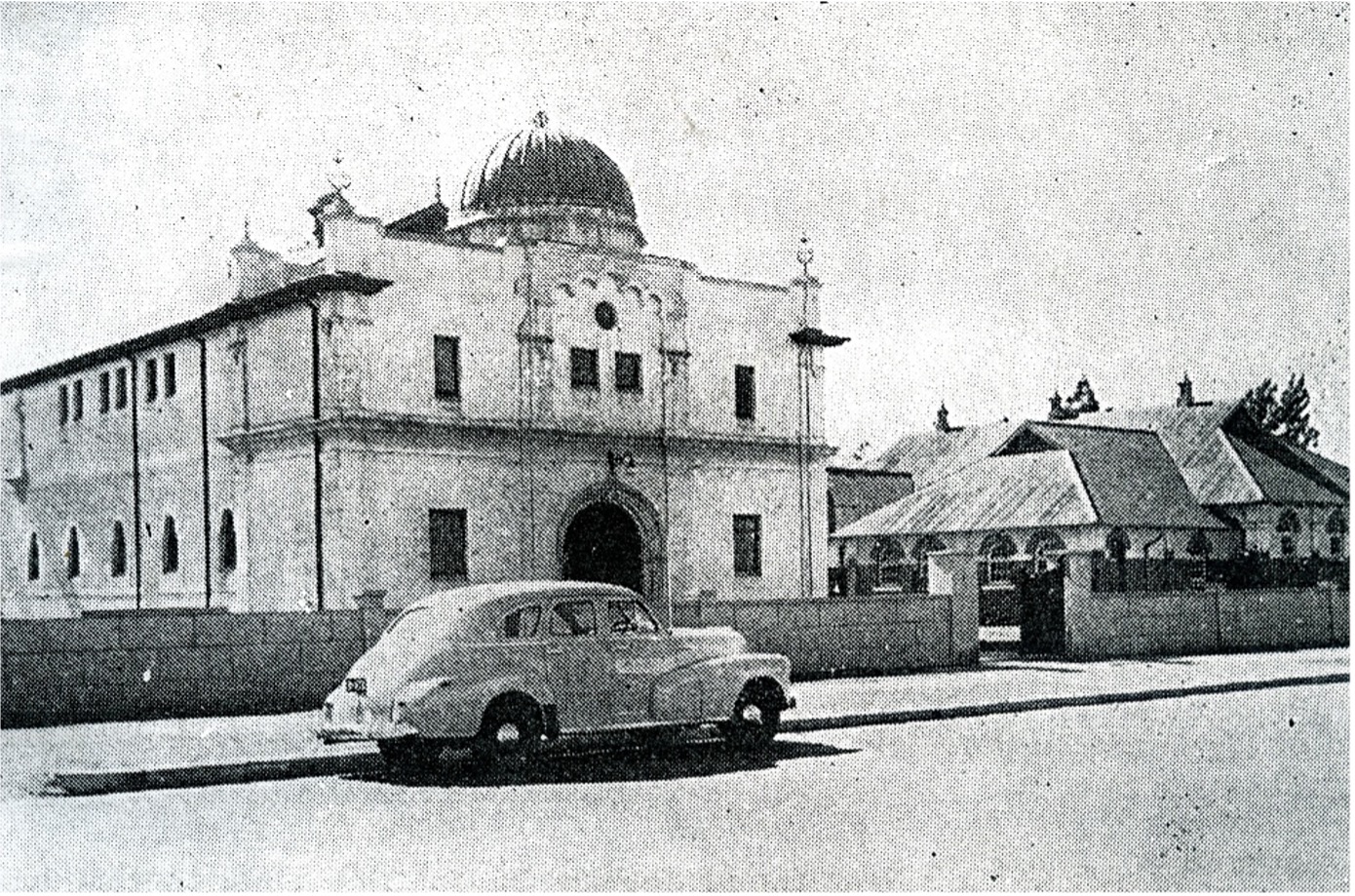
1904: The Bloemfontein Synagogue was opened by the President of the Community, Wolff Ehrlich. The building cost over £5,000.
After an advert in the London Jewish Chronicle the Rev. Zachariah Lawrence was appointed as spiritual leader. He arrived in Bloemfontein on 24th November 1904 and over 300 members of the community met him at the railway station and took him to the home of Councillor B Levy for a welcoming party. He established a committee for Hebrew Education and hired a schoolroom in Elizabeth Street.
1905: Children were awarded prizes for the Hebrew examinations for the first time, in front of a large crowd of parents and members. They also were granted permission by the Dept. of Education for classes in Hebrew to be held at high schools in the city, Grey College for boys and Eunice for girls, an association with both schools that lasted 40 years until 1945, when it was discontinued.
The distinguished Hebrew teaching staff over the years included Rev. Z Lawrence (1943); Mr Yechiel Blesowsky; Mr E (Topsy) Levitt; Mr Morris Wolozinsky; Mr M Sifman; Mr and Mrs Yehuda and Adele Trakman; Mr and Mrs David and Chagit Gorodetsky; Mr and Mrs Gabi and Sara Bitton; Rabbi and Mrs D Maizels and Mrs Henia Bryer, who taught for 42 years until her retirement in 2000. Mrs Rina Paz was the Hebrew teacher for 8 pupils in 2001.
1918: As the community continued to grow, they needed a communal centre. They bought the plot next to the synagogue for a hall and Cheder that served the community until the end of the 1940s. (Today the site of Bloemfontein’s first synagogue contains commercial buildings, and there is nothing on the property that acknowledges what once stood there.)
1930: Rev Reichenberg was appointed in addition, as cantor and shochet. Rev Lawrence died after 20 years of faithful service and because of the financial situation, the community decided not to fill his position.
1945: Plans were made to build a new larger synagogue and communal centre in Fairview Street, immediately to the north of the city centre, for the community of then over 1200 souls.
1953: The foundation stone for the communal centre was laid and in 1954 the communal centre was officially opened.
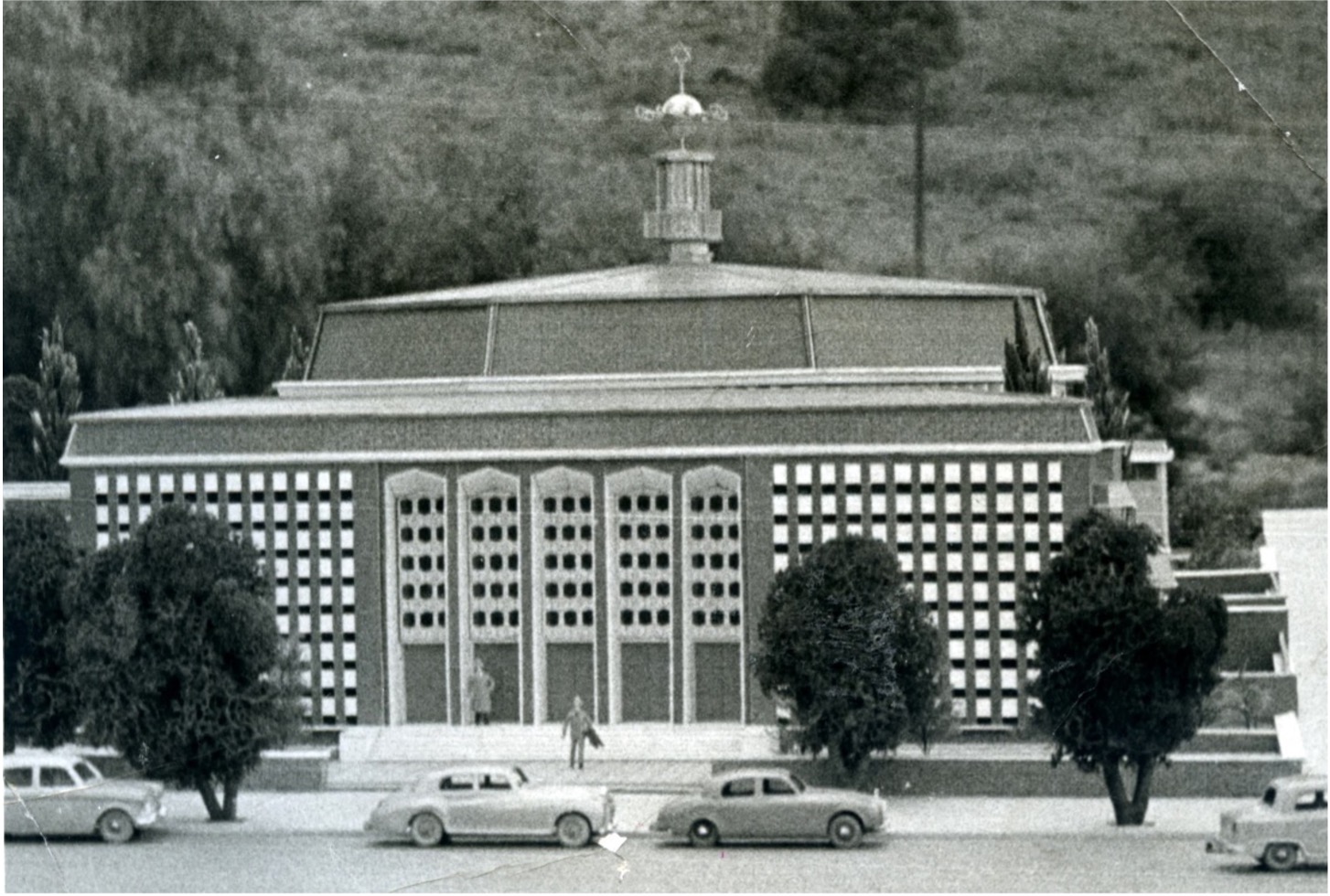
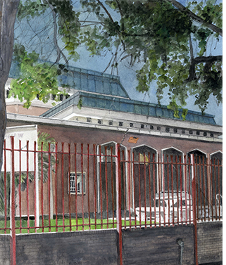
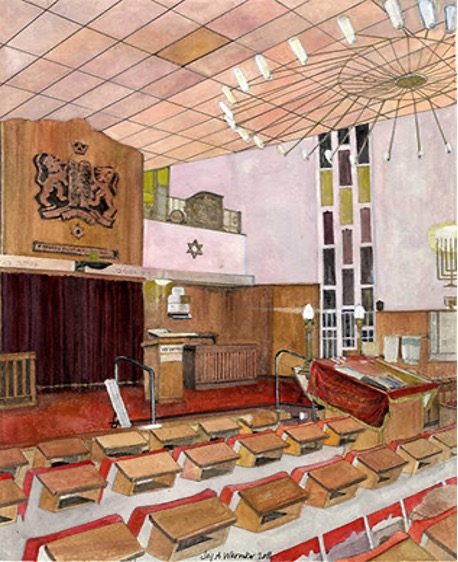
synagogue by Jay A Waronker in his book of
sub-Saharan African synagogues.
1965: The magnificent new synagogue was consecrated on 4th April 1965. Its design with its mostly solid brick walls, small clerestory windows, and copper roof, seems to recall some of the work of American architect Frank Lloyd Wright in its massing, horizontal proportions, use of materials, and stylized details.
The Bloemfontein Reform Temple
1960s: Some Bloemfontein Jews broke away from the Orthodox community and established their own Reform congregation. They too designed and built their own beautiful Reform Temple, opened in 1964 at 1 Dickie Clark Street – a residential area.
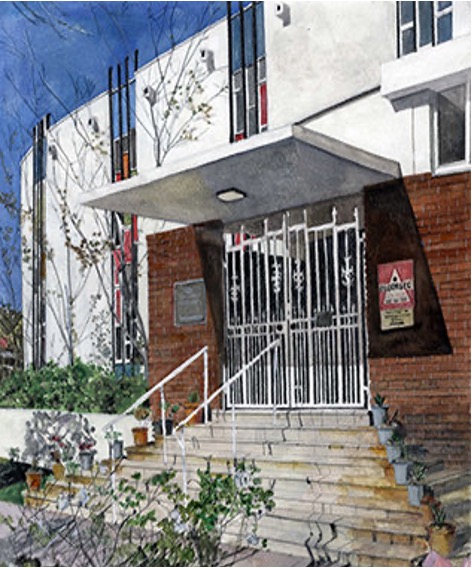
From the 1980’s, sadly, both communities were to drastically decrease, the Reform community becoming defunct. The Orthodox community decided to sell their own big building complex. They were able to purchase the smaller but still relevant Reform Temple complex, refurbishing it to their needs, including building a Mikveh.
1990s: After many years of negotiations, the Orthodox synagogue complex was sold to the Seventh-Day Adventist Church, who still own and maintain the property and use it for religious needs and public forums.
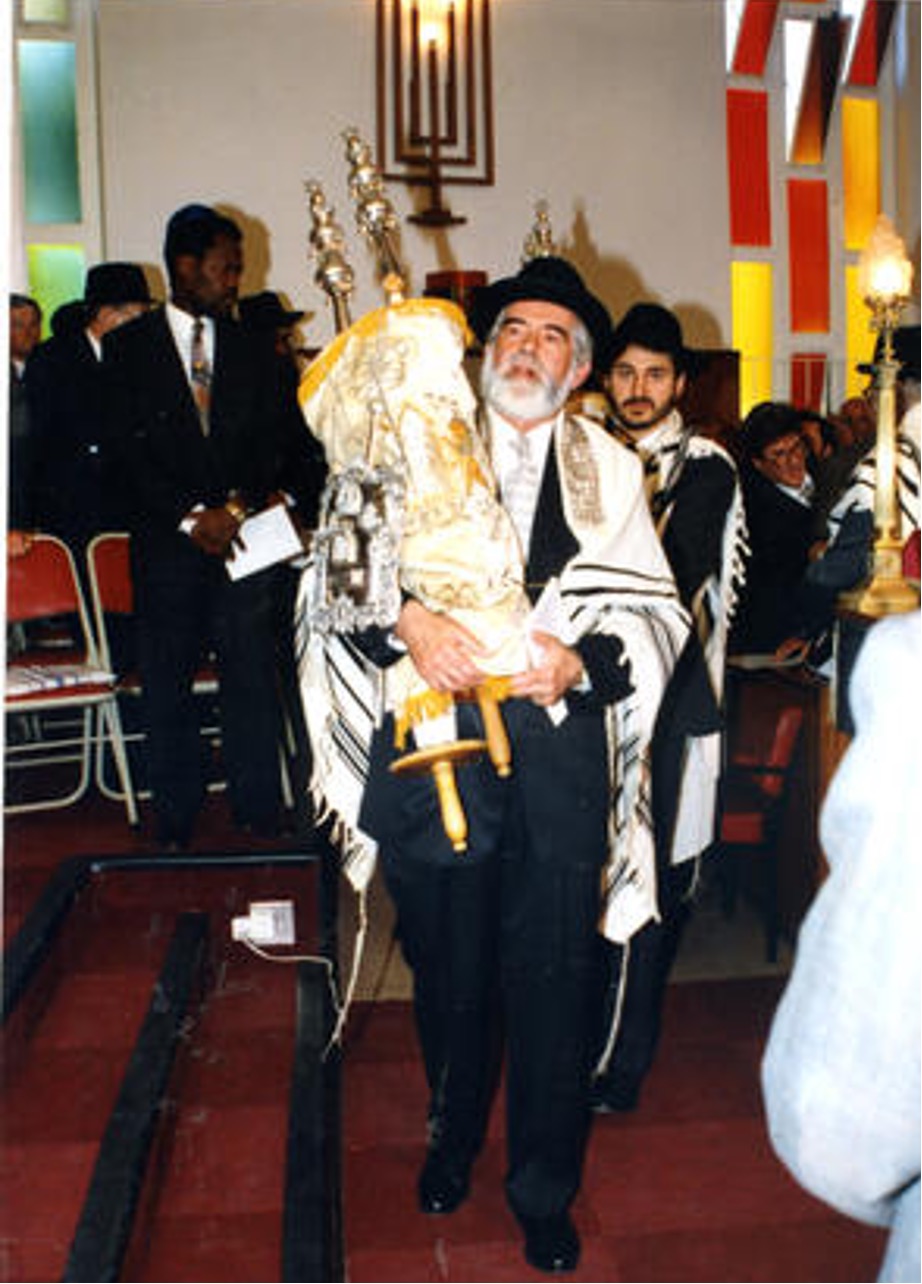
1996: The new complex was officially opened in April by Chief Rabbi Cyril Harris.
2025: The 'new' synagogue complex was also sold to a church. The new owners consented for the 23 remaining members of the Jewish community to continue their services in the boardroom of the complex, which has been converted into a small shul.
2026: In January services were begun there in the even smaller, but very comfortable, shul room. Even though they do not have a minyan, they have a regular Shabbos morning service. Allen Berelowitz is the Chairman and Joseph Shein a Committee Member.
2026: Due to the dwindling numbers of the community, approximately 23 people, the United Hebrew Institutions of Bloemfontein took the decision in February to become part of the SJCA (Small Jewish Communities Association of South Africa). The SJCA will maintain the upkeep of the cemeteries and at the same time look after their finances once the community is defunct.
See pictures on the Images page. Pictures by Jono David were taken in 2014, when the Orthodox synagogue was already the Seventh-Day Adventist Church and the Reform temple was already the new United Institutions synagogue.